Tomorrow's paper
How a daily newspaper was set and printed in the 1920s and 30s, one machine at a time.
Copy reached the composing room in the evening, still warm from the editors' table. There it stopped being words and became metal: every line of the next morning's paper had to be cast before the presses could turn.
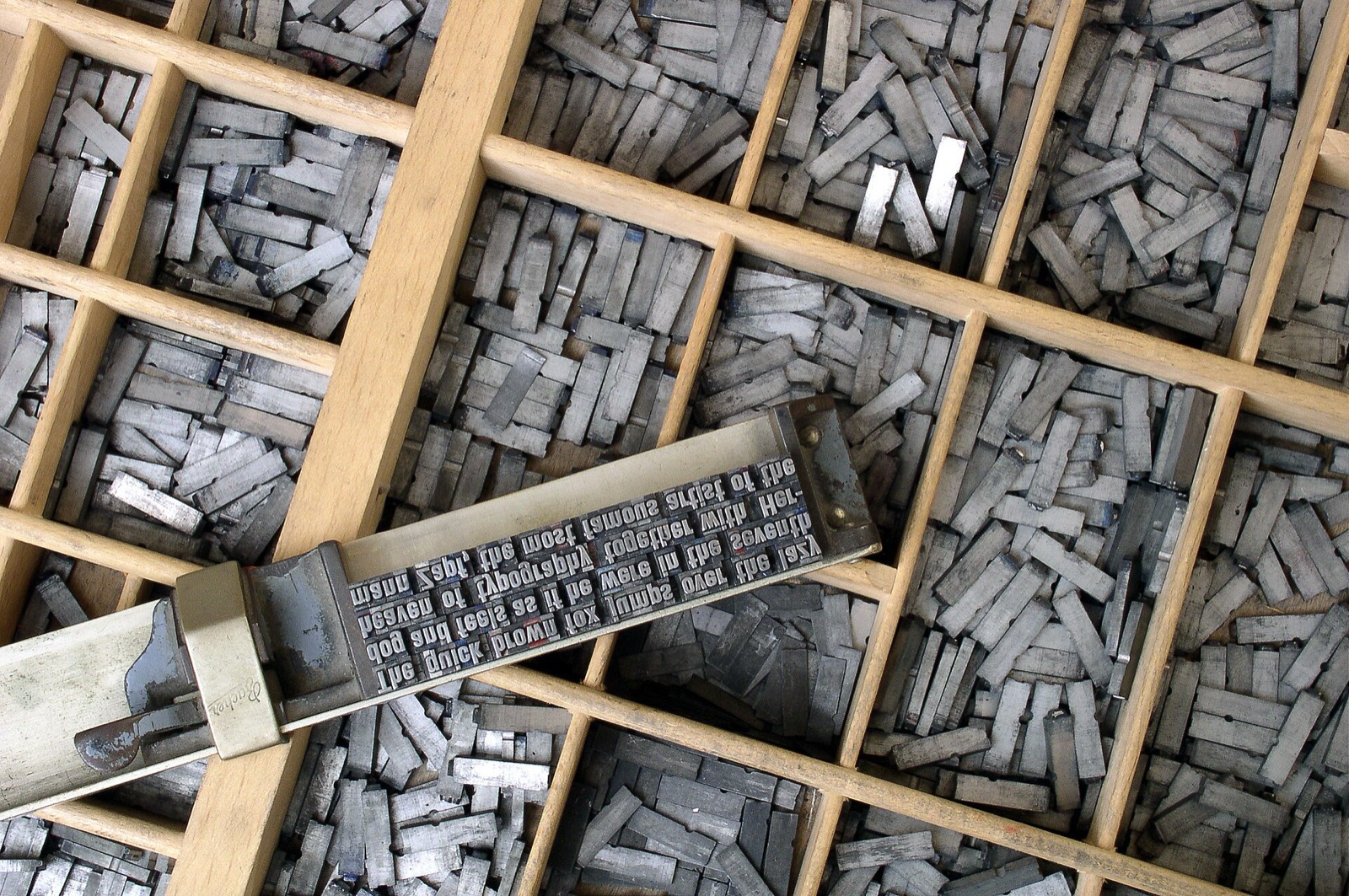
For centuries a compositor picked each letter from a wooden case and set it in a composing stick. A fast hand managed a few thousand characters an hour, far too few for a daily paper of many pages.
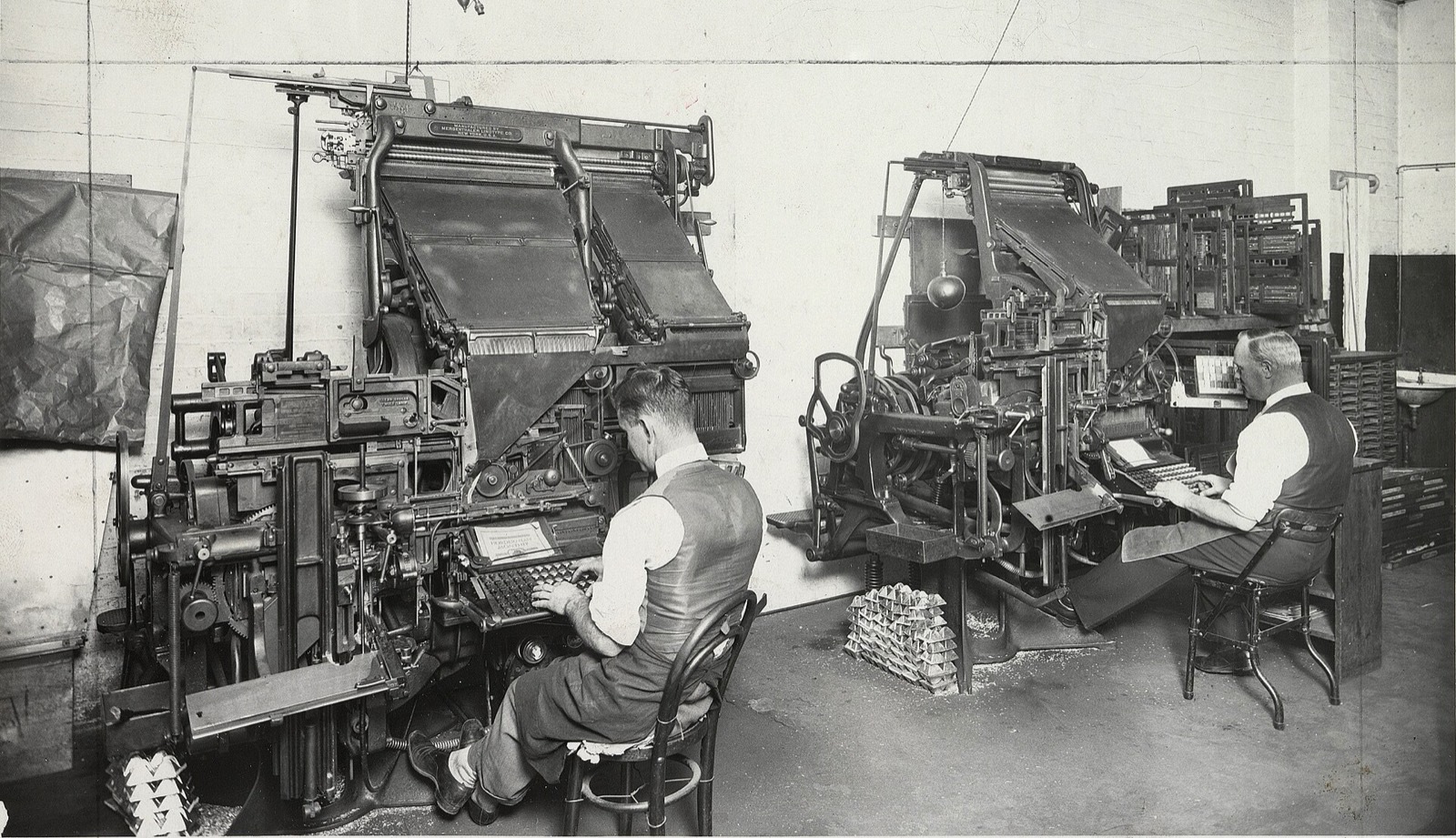
The line-casting machine let one operator type a line on a keyboard while the machine assembled brass matrices and cast the line as a single slug of hot metal. The slugs went into page forms, and the forms went to the press.
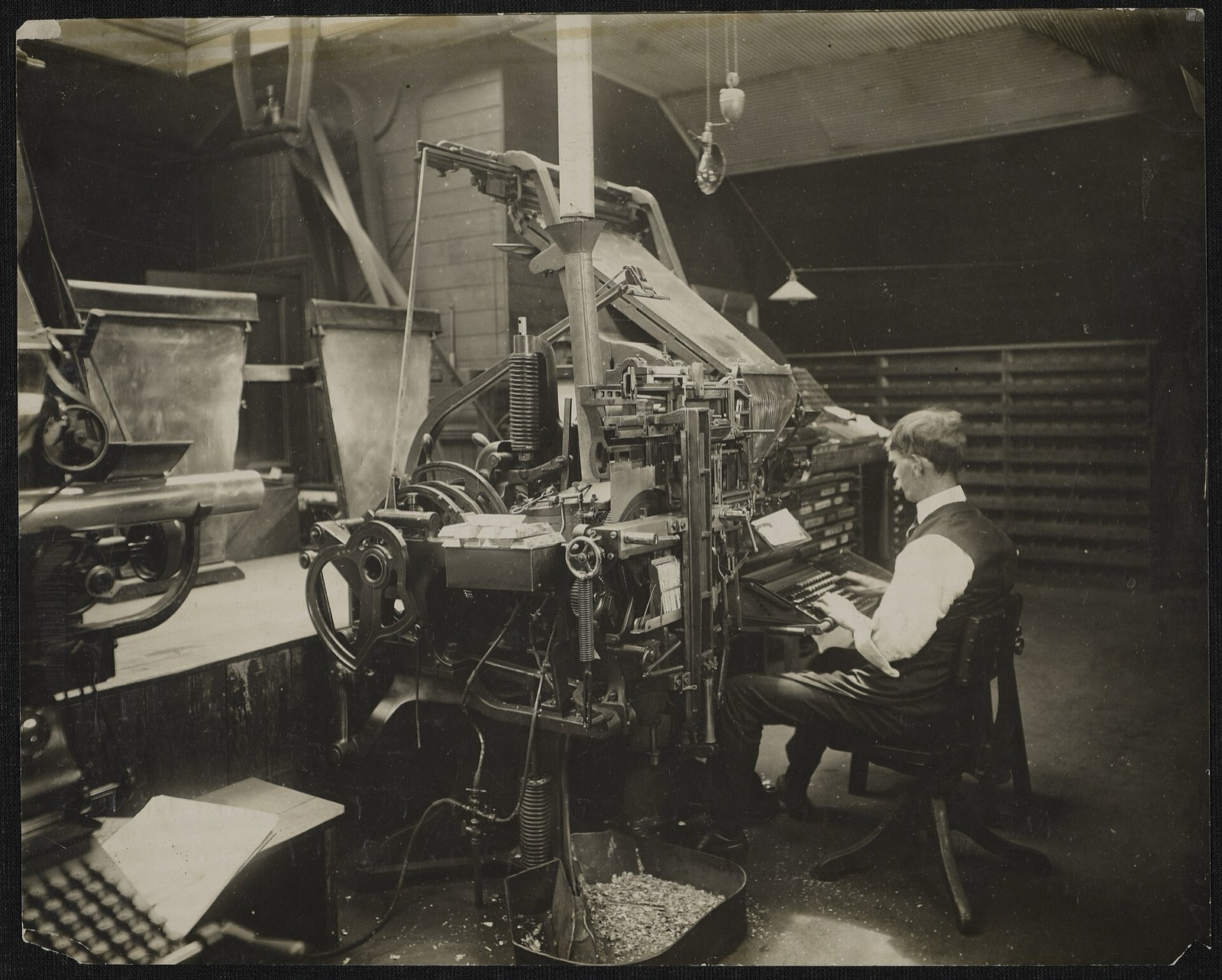
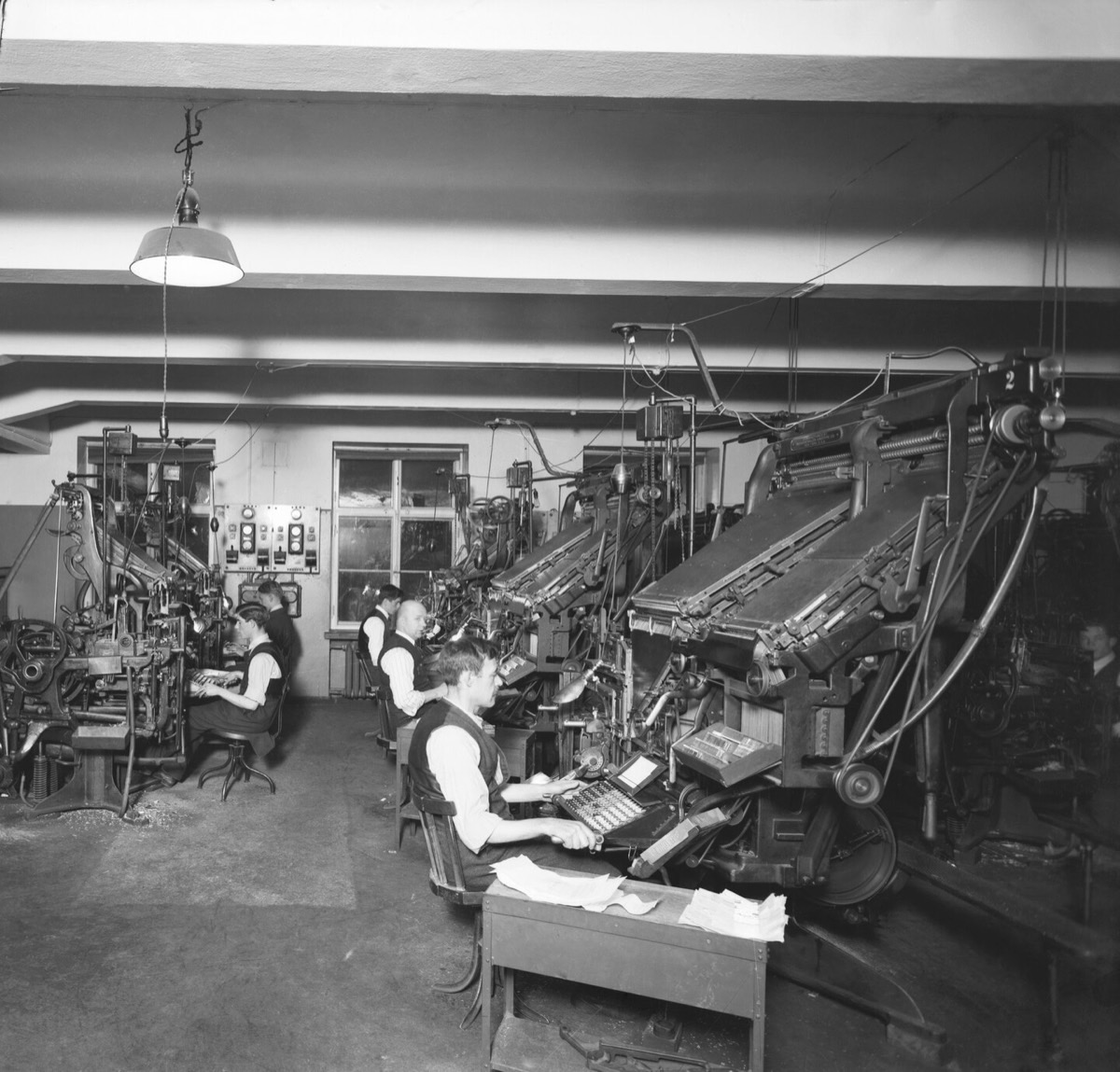
By the 1920s the composing room of a large daily was a hall of these machines, each with its operator, its pot of molten metal and its tray of fresh lines.
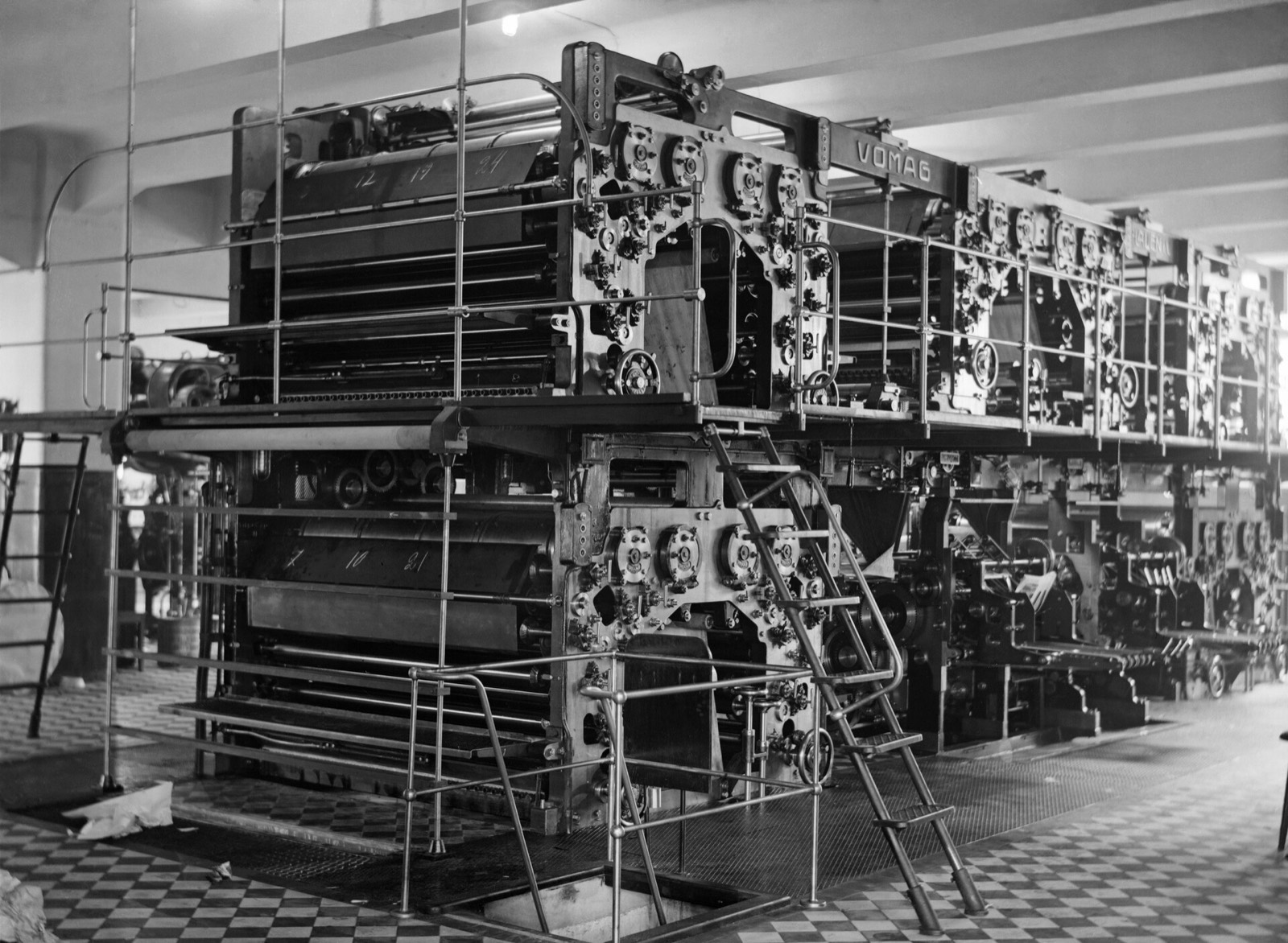
Last came the press. A rotary press printed from curved plates cast from the page forms, on a continuous web of paper, and folded the copies as they came off the cylinders.
Photographs: Finnish Heritage Agency (JOKA, Hufvudstadsbladet), CC BY 4.0; State Library of New South Wales and Archives New Zealand, public domain; Willi Heidelbach, CC BY 2.5. Details on the Breakouts page.